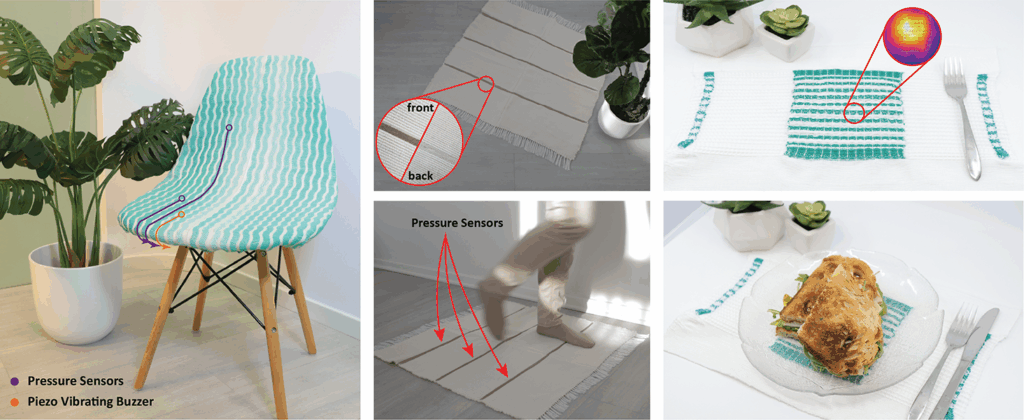
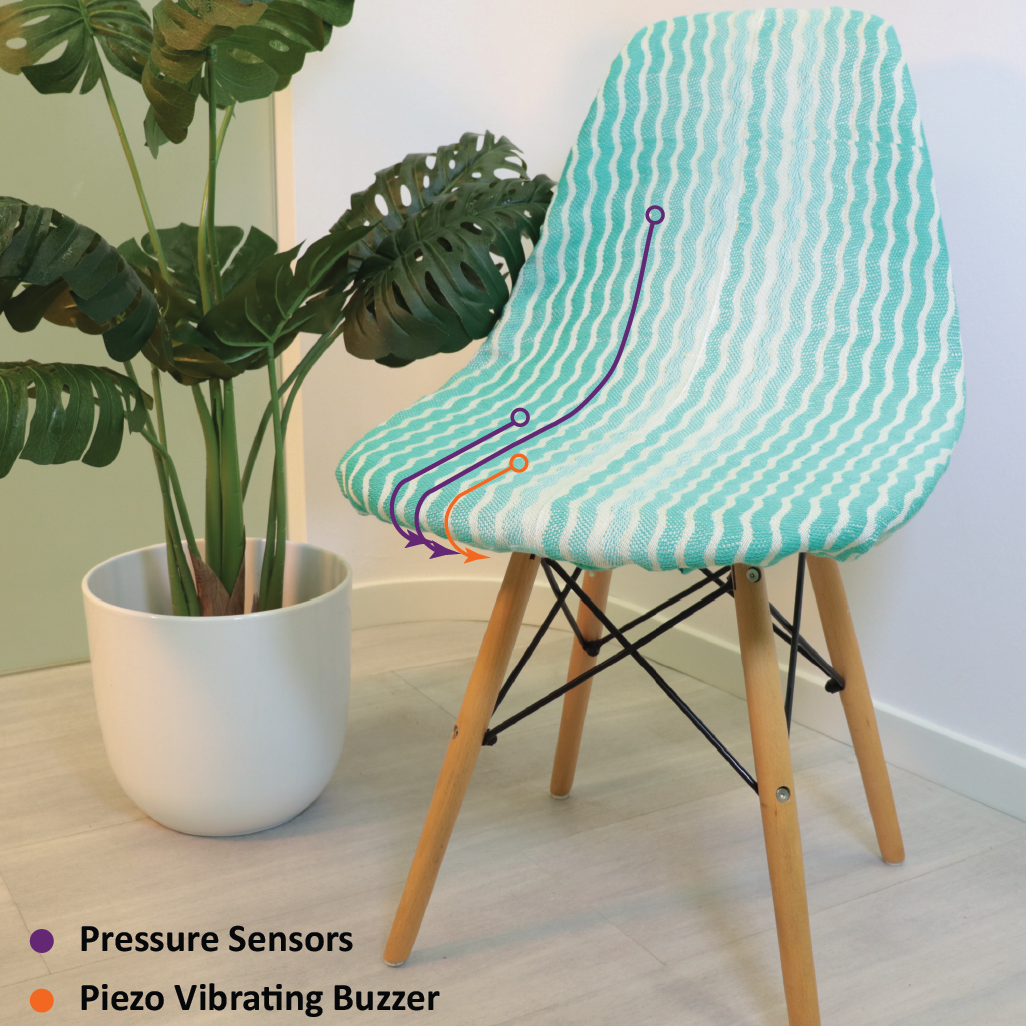
I designed this fabric chair cover, that can be retrofitted for existing office or dining furniture, while
seamlessly integrating a complete circuit. This application helps users correct their posture by subtly
alerting them when they are not sitting up straight. I made it using a digital technique of weaving wire
tunnels to conceal (in curvy waves) two pressure sensing spots and a small piezo motor that vibrates
when sitting is detected with no leaning back. I used cotton 2/20 yarn for the warp, cotton 8/20 yarn
for the top and bottom layer weft, and Madeira HC-12 conductive thread for all connections to the
microcontroller and battery that I’ve double-woven into single-sided pockets at the edge of the fabric.
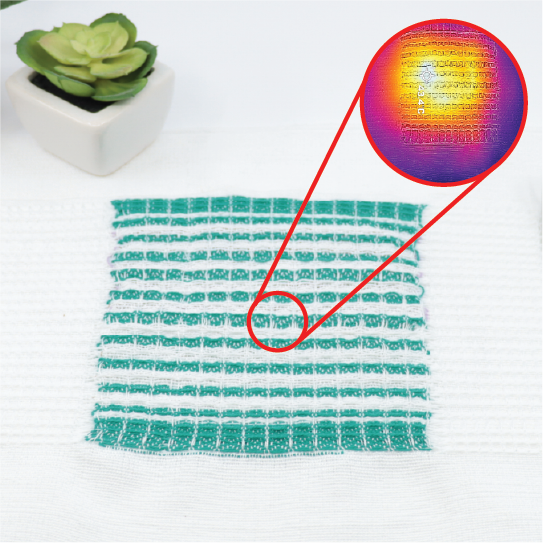
I created the Thermo-Placement using the T1 technique of
double-layer Ghost Inlays. This placemat, with dimensions 24×36
𝑐𝑚 (cotton 2/20 for the warp and bottom layer weft), has the ability
to keep food warm (see Figure 16). We wove Madeira HC-12 conductive thread into the bottom layer of the centre inlay pattern while
using regular yarn for the top layer weft (cotton 8/20). We used a
4x4 twill weaving structure for the Ghost Inlay sections, alternating
between two colours for visual appeal. For the background, we used
the waffle-ish pattern to give the placemat a sturdy, durable drape
with varying textures. In addition to the conductive inlay, the user can choose to use
the pocket created from the 2-layer structure to house an insulated
heating pad to warm up their food.
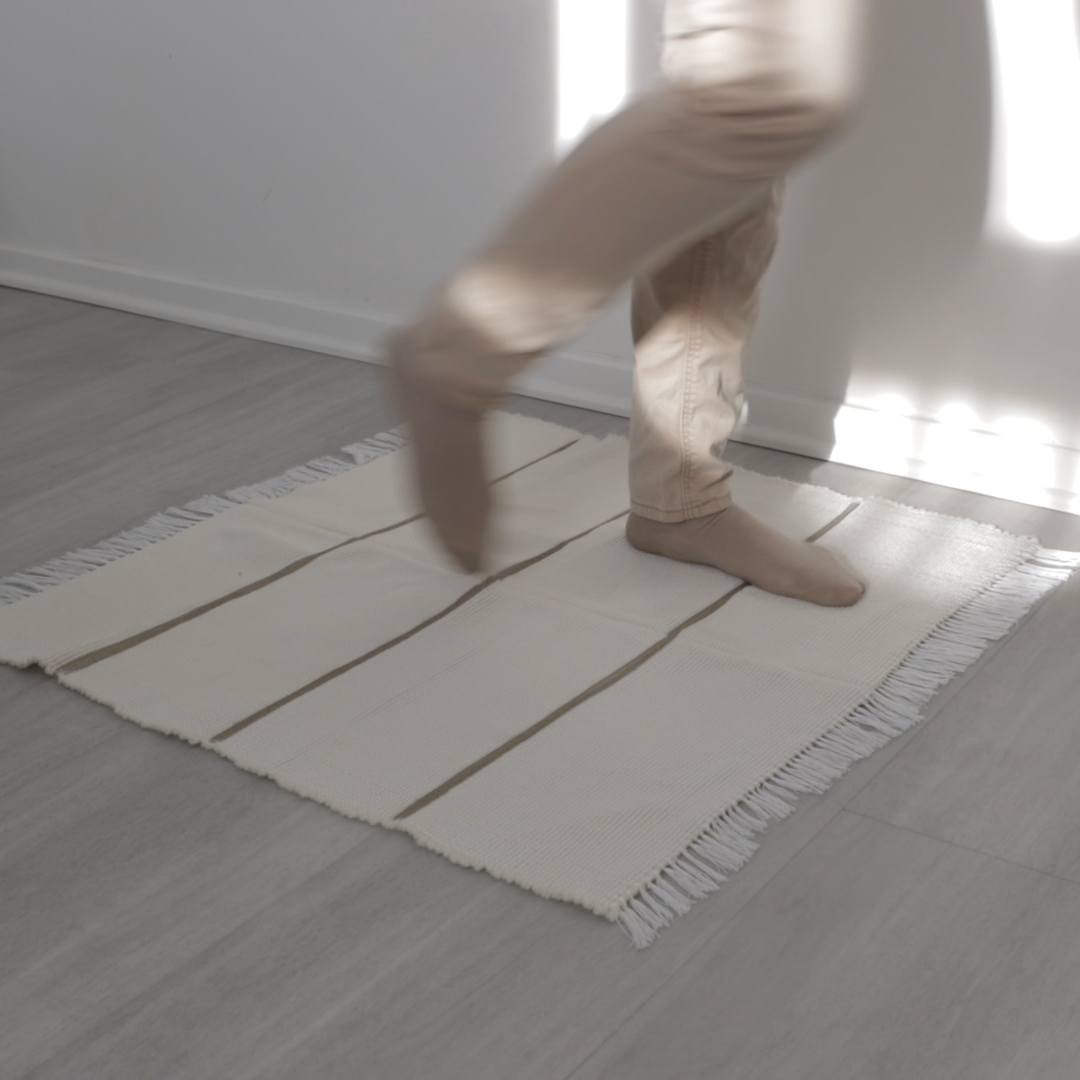
I wanted to make everyday fabric objects around homes that capture natural interactions of daily use. To explore this, I created a 70×75 cm rug that can detect when someone steps on different parts of it for activity recognition or fall detection.
This application resembles a Boho handwoven bathroom floor mat featuring natural colours. I used double weaving of conductive yarn to seamlessly integrate insulated electrodes (with a digital ghost inlay technique) in three touch sensing spots, detecting when users step on it (barefoot or with socks on). I used 8/20 cotton for the bottom weft layer in addition to a 2/20 mercerized cotton warp.