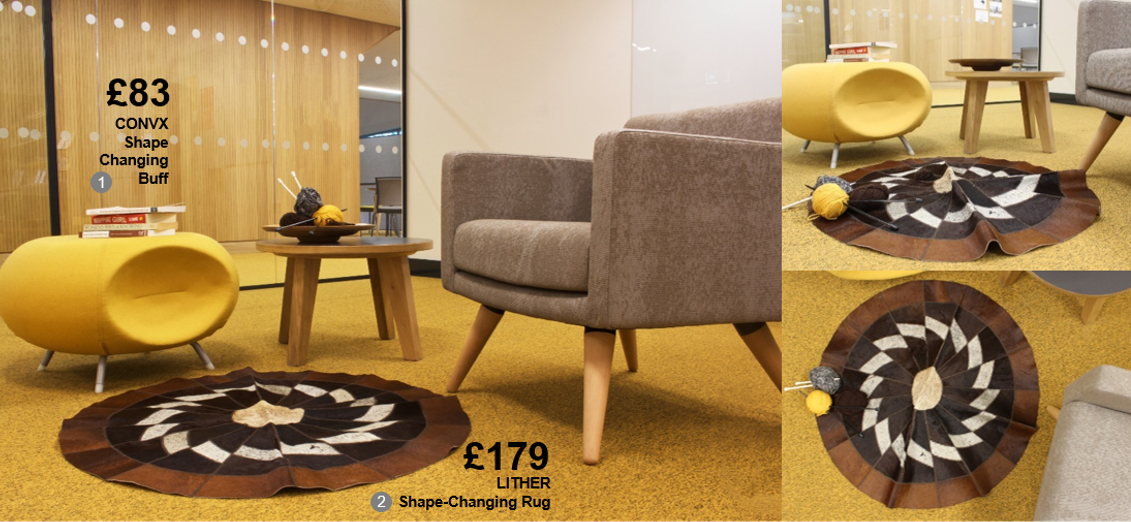
The LITHER rug is a shape-changing rug that responds to ‘ambient sounds’,
specifically high pitches of loud voices or noises. Every time LITHER rug detects
such a loud voice, it deforms as a whole (using SMA sewn underneath) then relaxes
leaving behind small parts that are kept deformed which
employs ‘Slow Interaction’ as it does not
return entirely back to its default state if surrounding noises persist (e.g. a screaming
parent, quarrelling couples, noisy children). Therefore, LITHER expresses aesthetic
interaction, encourages self-awareness and imposes self-reflection on one’s behaviour
and attitude, not just instantaneously but over time as well.
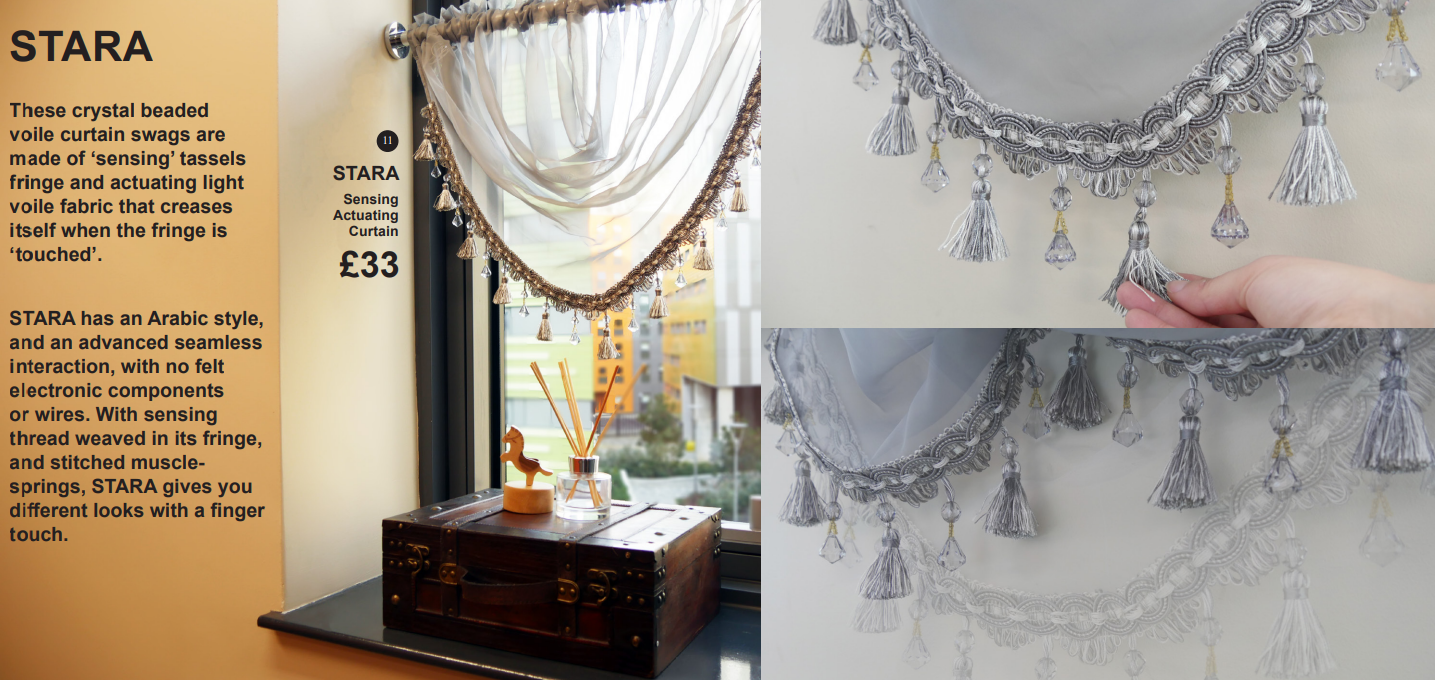
With its tassels being sensors and its voile being the actuator, STARA demonstrates how technology can be seamlessly embedded in interior elements, even in the softest, most delicate, and traditionally-aesthetic materials. I machine-sew the conductive thread to serve as both the sewing thread and the embedded sensor. While SMA springs pull the voile upwards based on touch-sensitivity of the tassels, gravity helps bring the SMA along with the voile back down.
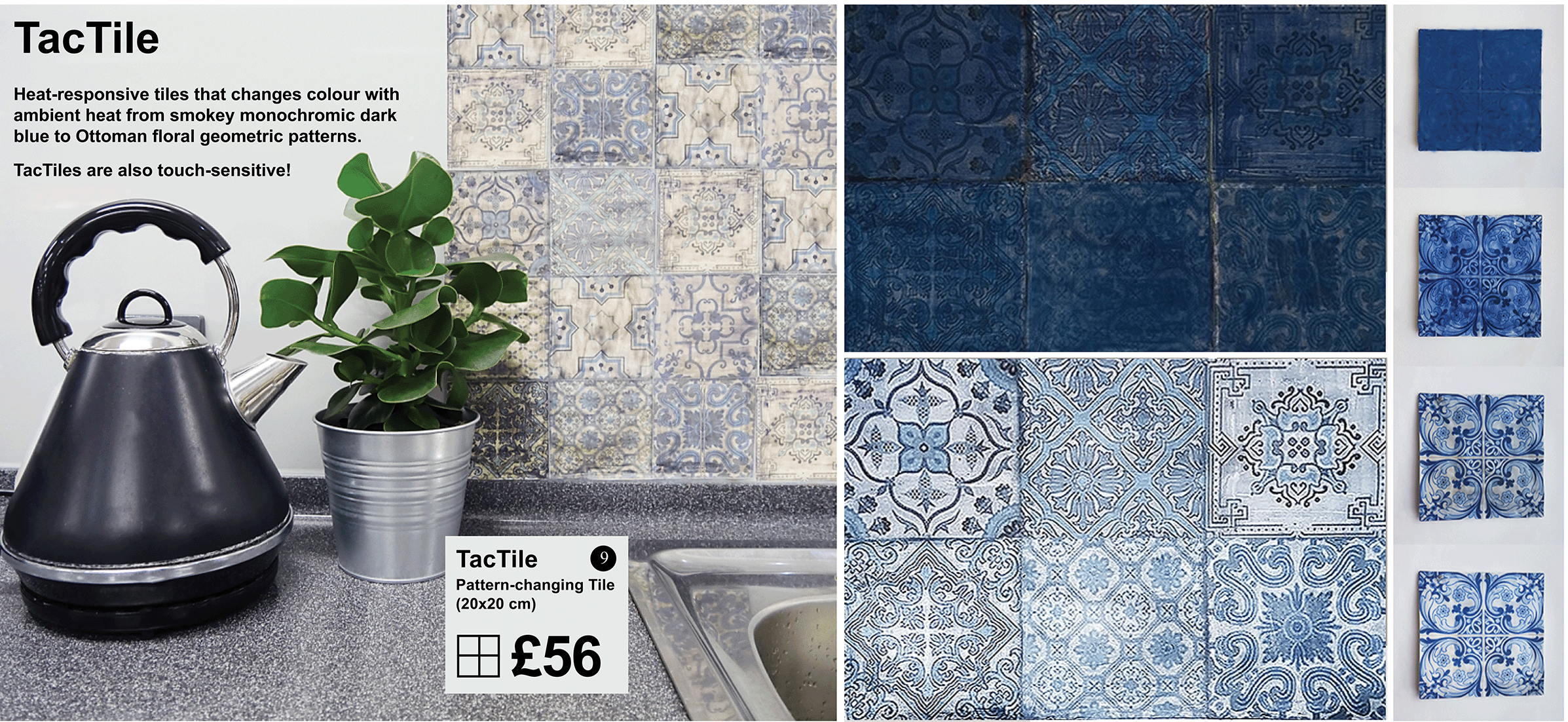
The square-shaped tiles act as large buttons that users can activate one after another
to turn on and off different patterns. Thus, people can play with the endless combinations of plain and patterned tiles on their walls. The unique texture of ceramic and
its aesthetic appeal should also play an important role in the experiential effect of
TacTiles. We imagine TacTiles deployed in the splashback of a kitchen responding to touch, allowing users to play with its pattern
and add a new eye-catching focal point.
The square-shaped tiles act as large buttons that users can activate one after another
to turn on and off different patterns. Thus, people can play with the endless combinations of plain and patterned tiles on their walls. The unique texture of ceramic and
its aesthetic appeal should also play an important role in the experiential effect of
TacTiles. We imagine TacTiles deployed in the splashback of a kitchen responding to touch, allowing users to play with its pattern
and add a new eye-catching focal point.