Mobile MuseuM
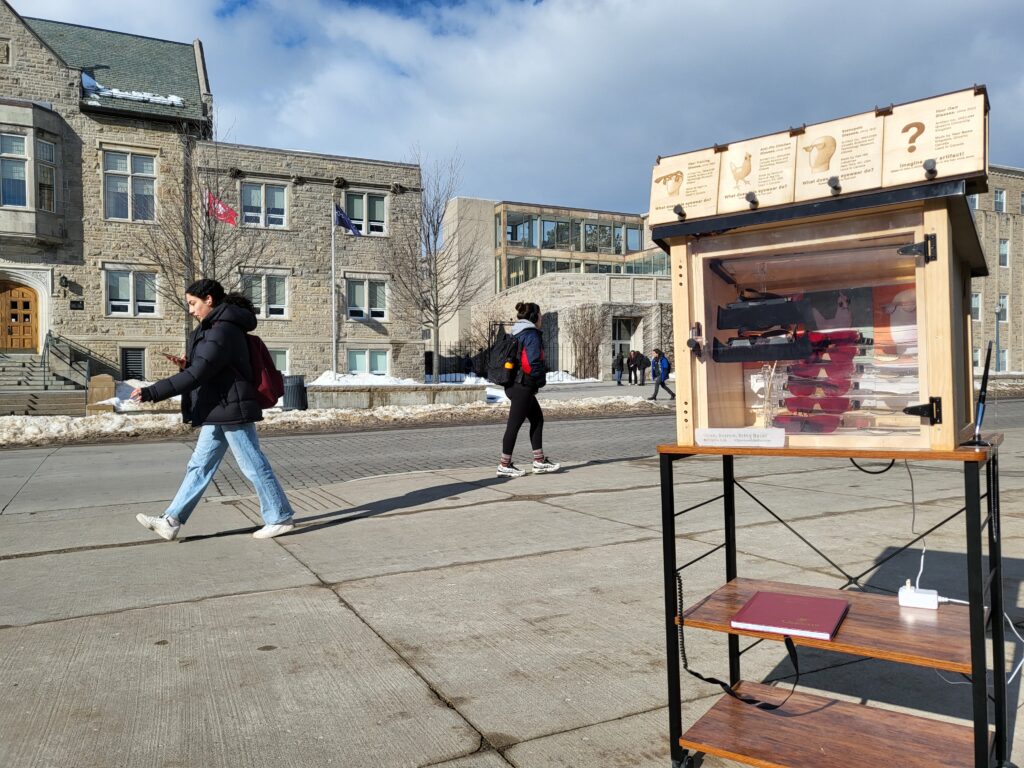
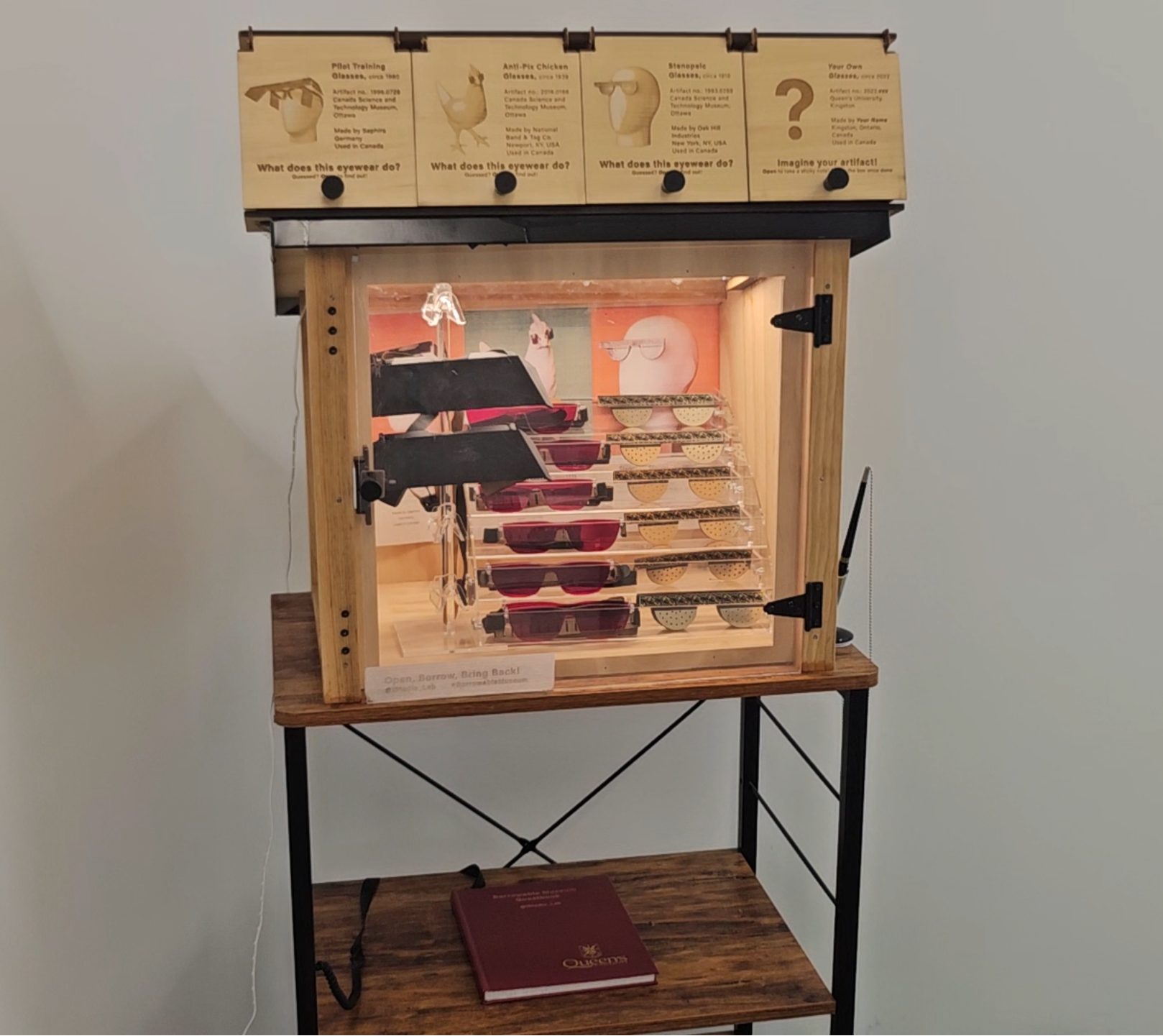
We explore how smart, portable, tangible, and borrowable museum displays can be used to expand museum
outreach, and provide tools for measuring user engagement. Our prototype, MobileMuseum, is a portable
museum display on wheels, housing digitally-fabricated replicas of artifacts from a national science and
technology museum. To track interactions without cameras, we embedded photo and magnetic door sensors
and RFID tags and antenna. Our deployment study was carried out for 2 months and included 4 different
locations (2 recreational and 2 educational). Data collected from 6 sensors, 261 hours of field observations, 17
filled questionnaires, and 14 interviews helped us understand interaction patterns. Qualitative and quantitative
findings revealed that self-monitored interactions encouraged deeper open-ended exploration. Social sharing
increased among people in groups while lower foot traffic increased engagement duration. We present
generalizable opportunities for self-monitored Interfaces that lends themselves to social circulation, ‘honeybee effect’, ‘order effect’, and ‘leftovers’ from users.
Across all deployment sites, we observed a consistent order effect in how participants engaged with the MobileMuseum labels: interaction frequency was highest for labels on the left and declined progressively toward the right. This pattern held despite variations in content, suggesting that spatial arrangement (not intrinsic interest) was the primary factor influencing which labels were opened first. Field notes confirmed that many participants opened labels sequentially from left to right, stopping after the third or fourth, and occasionally returning to a particularly intriguing one. We interpret this as a carryover from learned reading patterns in left-to-right cultures, where attention is biased along the horizontal meridian toward the left visual field. For HCI researchers designing tangible public interfaces, this highlights the importance of layout choices: the positioning of interactive elements can strongly shape engagement patterns, regardless of content salience. Designers should account for culturally ingrained spatial
habits when arranging physical elements to ensure balanced visibility and interaction.
Video:
Publication
Acknowledgment
We thank all participants for generously contributing their time to this research, as well as our
reviewers for their valuable insights. This project was funded by the Social Sciences and Humanities
Research Council of Canada (SSHRC) through the NewFrontiers Research Funds (NFRF) Exploration
grant NFRFE-2020-1271. The lab equipment was funded by the Canada Foundation for Innovation -
John R. Evans Leaders Fund (CFI-JELF: 41215).