FABRIC-LEGO
Medical braces and assistive wearables serve critical functions in
supporting mobility and aiding individuals with temporary disabilities. However, these devices often lack aesthetic appeal and
fail to provide personal expression, leading to psychological challenges and social stigma. We propose a novel fabrication method,
Fabric-Lego, which combines 3D-printing with traditional garmentmaking (pattern-making, sewing, ironing, and overlocking) to address these shortcomings. By integrating customizable Lego®-like
blocks into wearable fabrics in accessible DIY ways, users can personalize their wearables while maintaining comfort and functionality. We present the fabrication process, including insights on
materiality, pre-processing, 3D-printing, and post-processing steps.
To demonstrate the design space and potential applications of our
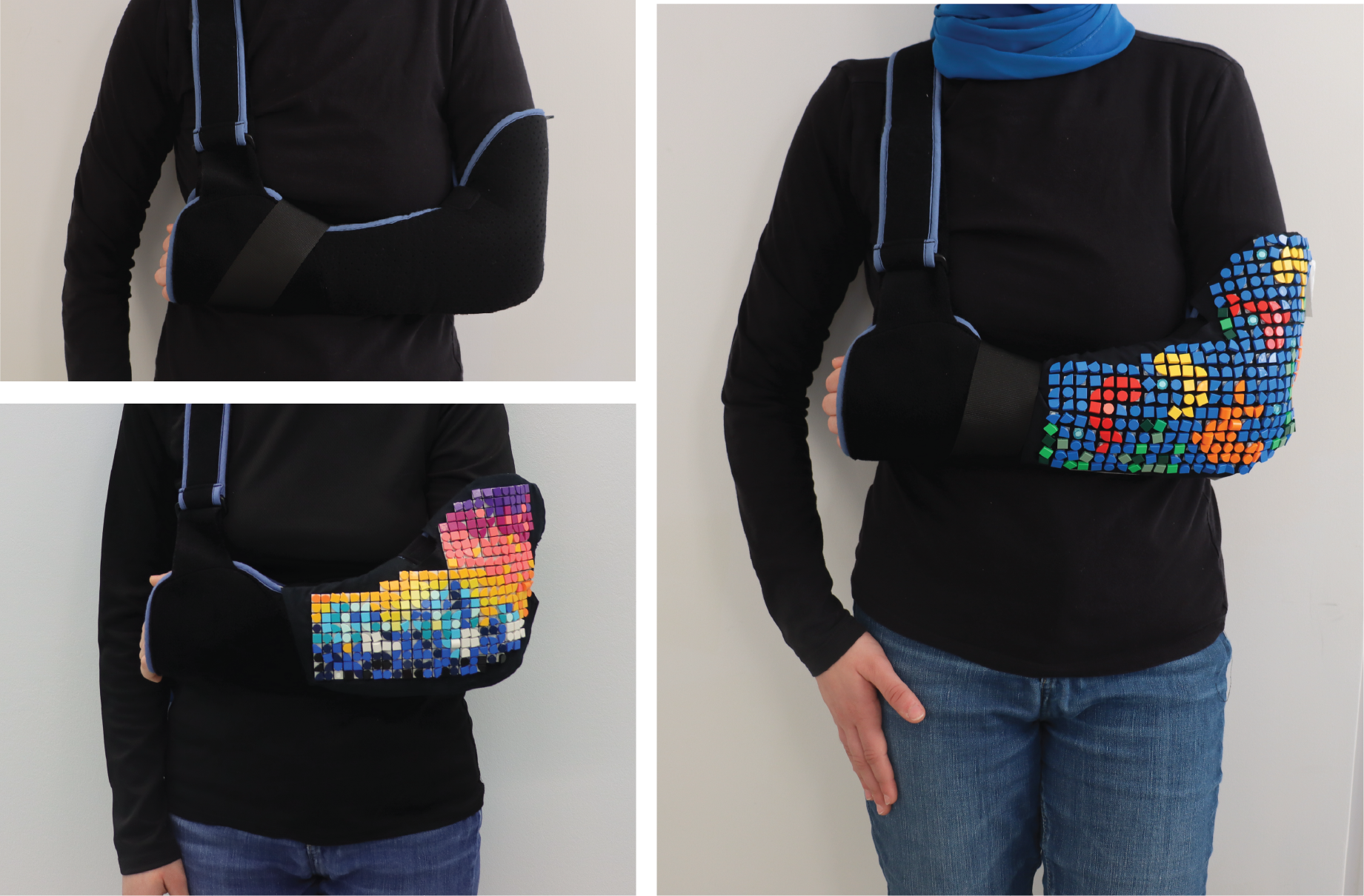
method, we implemented 3 prototypes: 1) a customizable arm sling
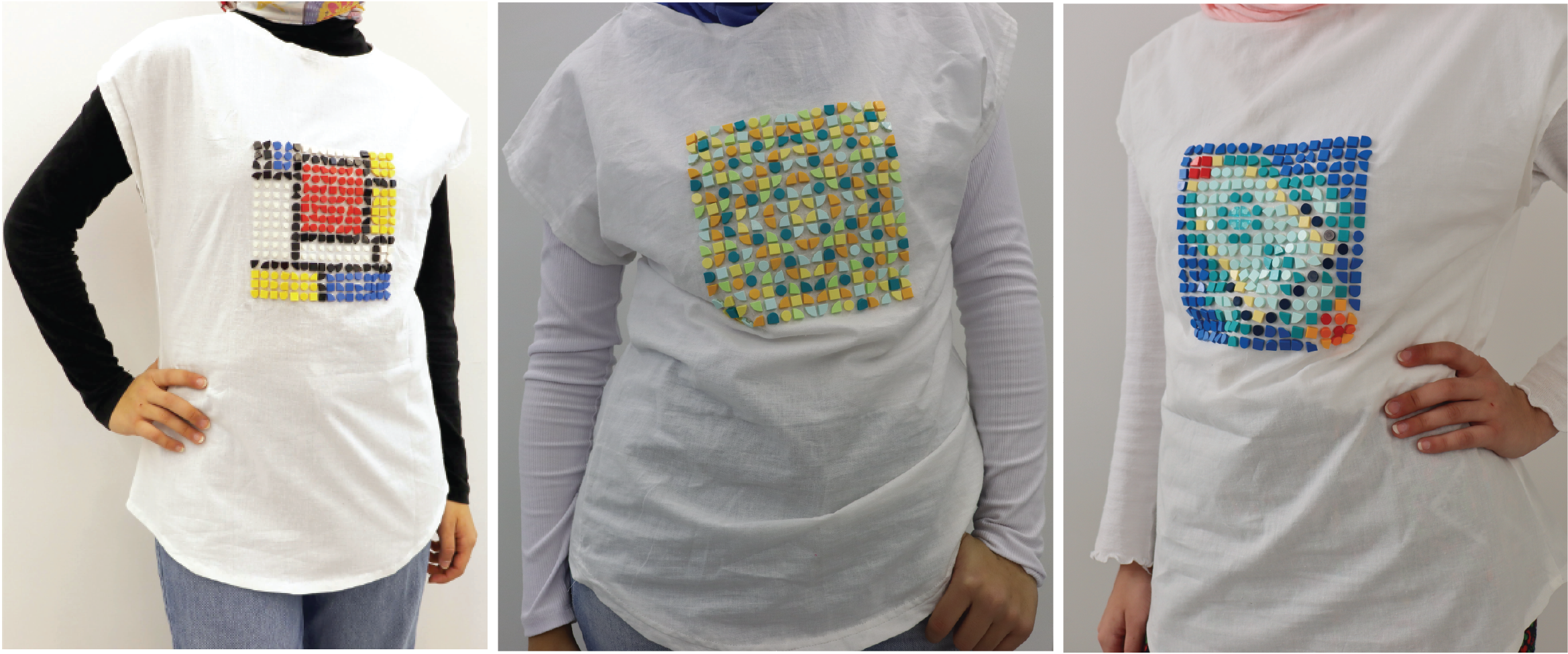
cover, 2) a customizable fnger splint cover, and 3) a T-shirt with
integrated blocks. This approach ofers a promising path for enhancing the user experience and empowering individuals to embrace
their unique identities.
The first application consists of an attachable cover for an of-the-shelf assistive arm sling that is used as a shoulder/elbow immobilizer. To design its Fabric-Lego cover, we created
a paper grid pattern, using the same measurements of the sling,
marking where each block is located, and cut it to size assuring
it would fit correctly. Using this grid, we transitioned the design
layout of the bricks onto a 3D model to print. Then, we used plain
black 100% cotton fabric and cut it to size, keeping a 2cm seam
allowance around all sides. Once we integrated the blocks using
the method above, we stitched snap-buttons onto the top side of
the sling and arm sling as well as Velcro on the bottom to allow a
snug ft. This cover allows for personalization and self-expression
of an otherwise plain coloured or hostile looking medical brace.
The third application consists of a t-shirt with the blocks integrated
in a 16x16 grid in the middle of the front bodice. We
cut a 2-piece t-shirt pattern from plain white 100% cotton fabric and
used the front side to 3D-print the Fabric-Lego. After the frst/base
layer of all the blocks were printed, we secured the shirt’s front to
the build plate of the 3D printer, making sure to keep it fat and
create tension ensuring the following layers of blocks will adhere.
After 3D-printing was done, the front and back sides were machinesewn with straight stitches and secured with an overlock machine’s
coverstitch. The curved neck line and bottom hems were pinned
and ironed inwards before serging for a clean fnish. With this approach, users can download and customize designs to upcycle their
everyday garments rather than constantly replacing them. This
opens the door for new personalized aesthetics (breaking norms
of imposed trends) supported by personal fabrication that reduces
fast fashion and ofers opportunities for sustainability alongside
personal expression.
Video:
Publication
Acknowledgment
This project was funded by the National Sciences and Engineering
Research Council of Canada (NSERC) through a Discovery Grant
(2021-04135), its Discovery Supplementary Fund (2021-00310), as
well as through a Queen’s Research Initiation Grant (RIG). We
acknowledge the support of Ontario Research Fund and Canadian
Foundation for Innovation for this research.