interactive Peace FURNITURE
The world is promoting inclusion and diversity more than ever before. Many people have dual-identities that they alternate between and may often blend. In our design research we explore everyday objects and the role of technology to accommodate people’s needs and personalities. Can furniture change its shape to reflect our dual-identities? Can our interior spaces reveal their hidden aesthetics when interacting with us? We designed a set of matching interactive furniture to unfold these narratives. Our Peace Table and Peace Painting change colour with proximity to reflect the dual identity of Western-Muslims. This work describes our design concept and process with the aim of encouraging the HCI community to design for experiential artwork. Such interactivity can enrich and add new dimensions to the quality of living experience by merging technology into home decor in calm, ubiquitous and non-intrusive ways.
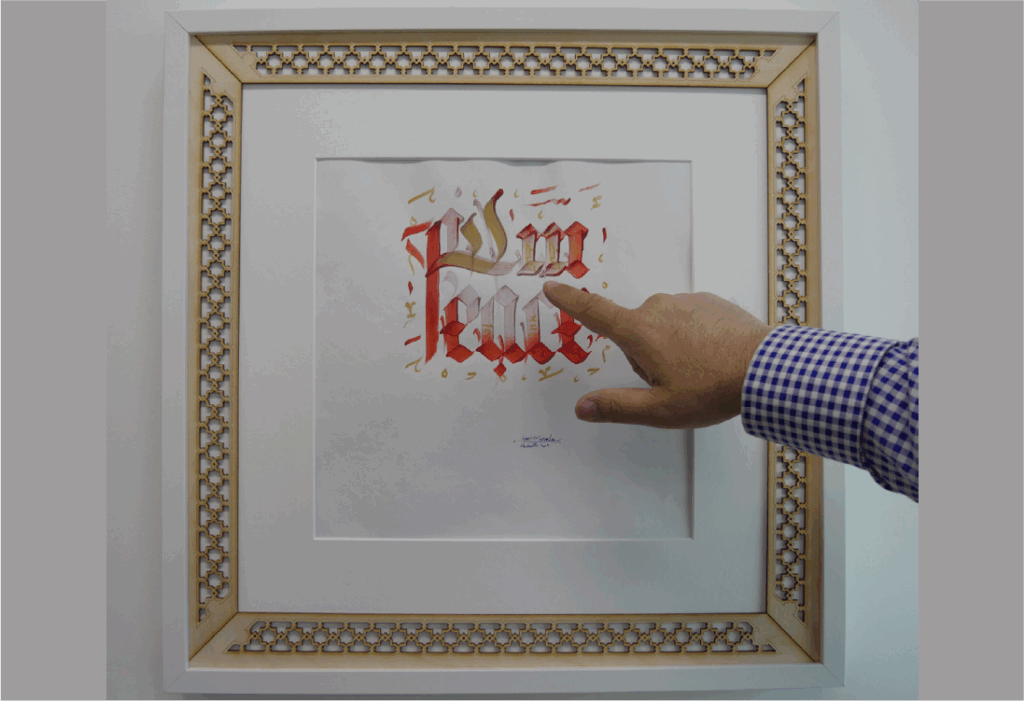
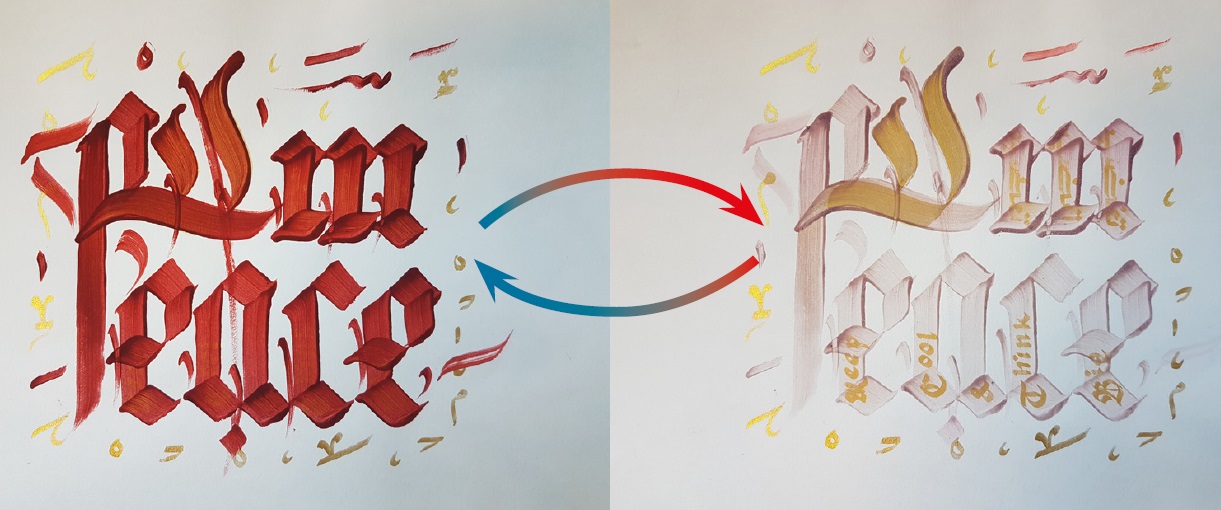
The artwork in this painting is unlike common paintings. The blend of the
word Peace in both Arabic and English, painted in a single script is meant to
reflect the harmony of both co-located communities: Muslims and non-Muslims. Our aim for the design of the two words is to reflect an integration between
the characters of both sides together without assimilation. The thermochromic text disappears when touched to read a hidden message underneath.
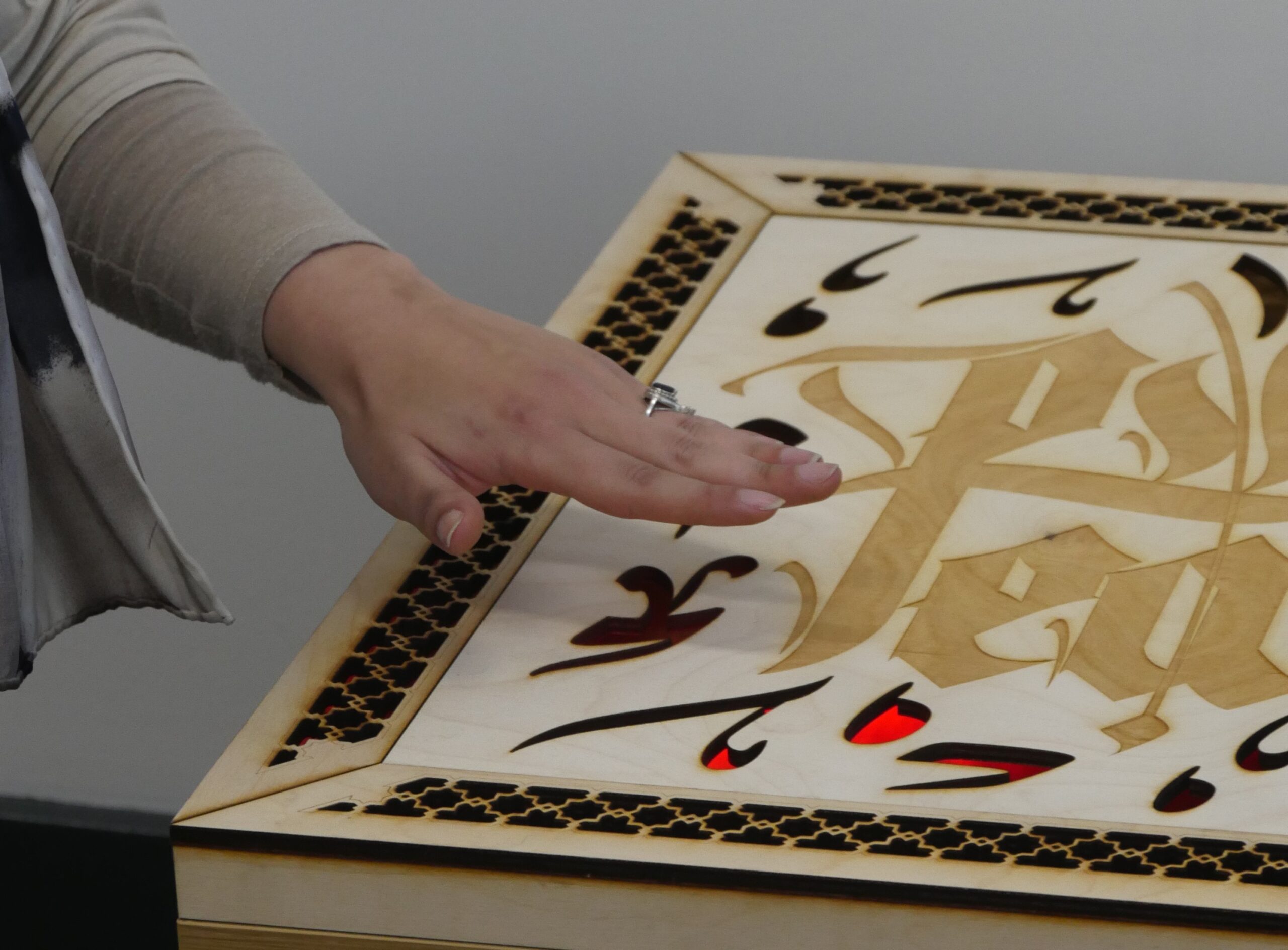
The Peace table is a hack of the IKEA LACK side table. We digitalized the Peace script design and engraved it on the tabletop plywood using laser-cutting to match the Peace painting. An arabesque border was also laser-cut and glued around to enrich the style. A battery-powered proximity
sensor was added inside to respond to people by gradually changing the colour of a WS2812B 'sparkle' strip using a
CRUMBLE microcontroller. The customization of the IKEA table in this way transforms the plain top face into an interactive piece that supports self-reflection as the proximity-sensing colour-change fades away slowly. It also enriches the decorative style of home spaces with DIY tech-making and fabrication methods at minimum cost.
Video:
Publication
Acknowledgment
We would like to deeply thank Jan Kučera and Mohamed AbdelAziz for their support in making our 'peace' pieces in addition to all our participants whose feedback formed the experiential outcomes of this work.